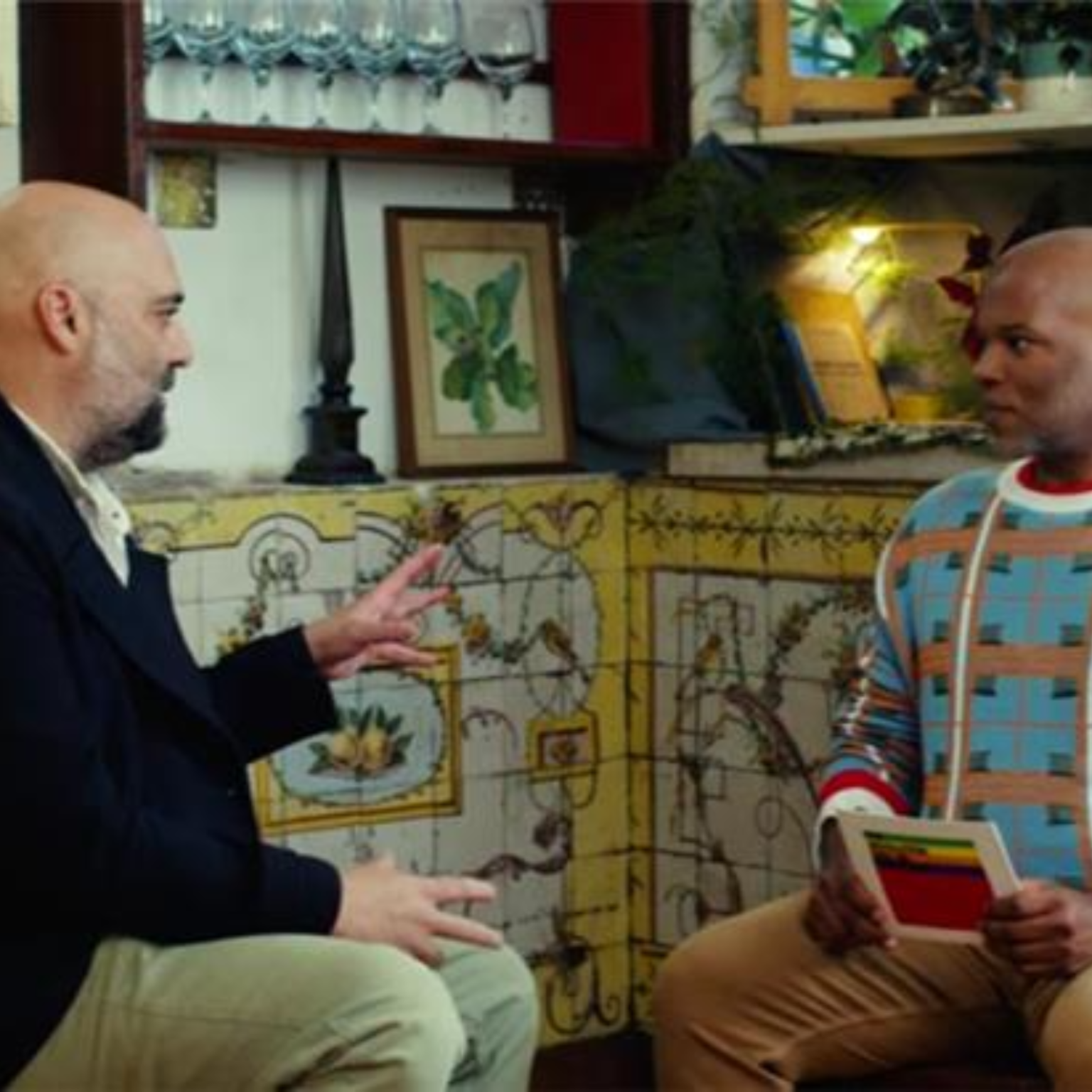
The latest episode of *The Revolution Will Be Televised* brings together Portuguese director Sérgio Graciano and Coréon Dú to look back on a career marked by collaboration between Portugal and Angola, international recognition and the changes currently taking place in the audiovisual industry.
The filmmaker, who has worked in both film and television, shares with Coréon Dú some of the experiences that have shaped his career and reflects on the need to move between different formats, markets and creative languages.
A career forged between Portugal and Angola
The conversation looks back at some of the collaborations between the two professionals, including *Njinga, A Rainha de Angola*, *Windeck* and *Jikulumessu*. For Graciano, returning to Angola to film Njinga meant rediscovering a country he already knew, but to which he returned with a fresh perspective: “Angola is a country that lends itself perfectly to film,” he explains during the episode.
The filmmaker also highlights the development of the Angolan audiovisual industry and the talent that has emerged in recent years. In his view, production and the experience gained will be key to ensuring the sector continues to grow and can achieve greater international recognition.
His own career path also reflects this connection between markets. After his early work in Angola, Graciano established his career in Portugal, working in both film and television. A journey that has led him, as he explains, to occupy a middle ground between the two worlds.
Creating without being pigeonholed
One of the central themes of the conversation is precisely the difficulty of fitting creative professionals into rigid categories. Graciano advocates a hybrid career path, one that combines film, television and projects of various kinds.
“I want to be in this sort of hybrid space,” says the director, who believes there is still a certain amount of prejudice towards those who work on both commercial and auteur projects at the same time. For him, the opportunity to move between these two spheres allows him to broaden his creative possibilities.
The conversation also touches on the impact of new technologies and artificial intelligence on the audiovisual sector. Graciano believes that these tools will transform the way films and television programmes are made, but argues that there must always be a person behind the creative decisions.
Beyond the awards and accolades – including the International Emmy – the director is committed to continuing to experiment and learn. To round off the discussion, he sums up his view on creative work in a simple idea: “create, create, create”.
Through this conversation, *The Revolution Will Be Televised* once again turns the spotlight on the people working behind the scenes on audiovisual productions and on the changes that are redefining the way stories are told.